7 Things to Check Before Buying a Leather Office Chair
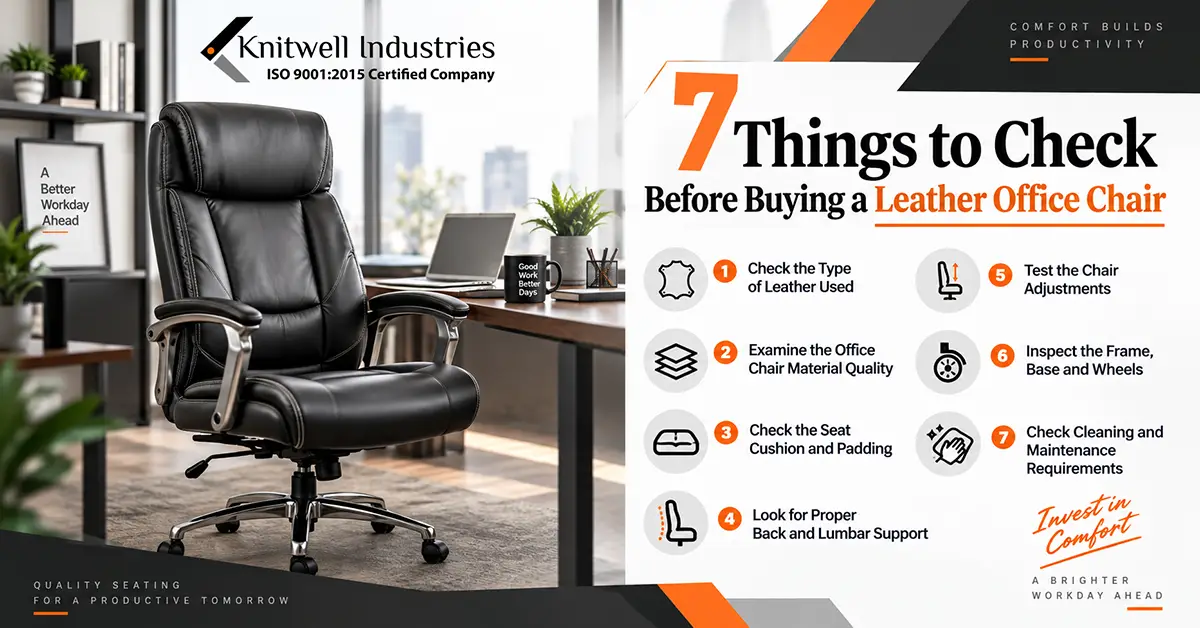
A good office chair can make a clear difference to how comfortable you feel during long working hours. While design matters, the quality of the seat, upholstery, support and frame matters much more. A leather office chair is often chosen for cabins, meeting rooms and workstations because it gives the space a neat and professional look.
Before choosing the best office chair, check how the chair feels when you sit on it, what material covers it and how well it supports your back. Some buyers prefer a pure leather office chair, while others choose PU, PVC or other synthetic options because they are easier to maintain. Understanding the office chair material and comparing different chair materials can help you spend your money on a chair that suits everyday use.
7 Things to Check Before Buying a Leather Office Chair for Better Everyday Comfort
The best leather office chairs are not chosen by appearance alone. A chair needs the right upholstery, cushioning, support and construction to stay comfortable over time. Here are seven things worth checking before you buy.
1. Check the Type of Leather Used
Start with the upholstery. Office chairs are made from genuine leather, PU leather, PVC leather, bonded leather or synthetic leather.
The pure leather office chair will have a natural grain and feel to it but tends to cost more and requires regular maintenance. PU and PVC options are widely used because they are available in many textures and colours and are easier to clean.
For offices, Furnishing leather material is particularly relevant because it is designed for applications such as chairs, sofas, seating and other upholstered furniture.
Before buying, ask the seller exactly which type of leather covers the seat, back and armrests.
2. Examine the Office Chair Material Quality
The quality of the office chair material affects its appearance as well as its life.
Look closely at:
- Surface thickness
- Stitching quality
- Backing strength
- Edge finishing
- Texture
- Colour consistency
Good upholstery should not show loose stitches, peeling edges or uneven areas.
Different chair materials react differently to heat, moisture and regular cleaning. A material suitable for Footwear or Automotive use may have different performance requirements from upholstery designed specifically for furniture. This is why the intended application of the material matters.
3. Check the Seat Cushion and Padding
Good-looking upholstery cannot make up for poor cushioning.
Instead of judging it by photos, try sitting on the chair for a few minutes. The seat should be firm enough to bear your weight but soft enough to work for long hours.
Low-quality foam may flatten quickly. A good cushion should return to its shape after you stand up.
When you are looking at the best leather office chairs, you need to check the outer leather and the inner padding. A well padded leather office chair can be comfortable for longer periods of time and takes pressure off your thighs.
4. Look for Proper Back and Lumbar Support
Your backrest should support the natural shape of your spine.
Sit back completely in the chair and see if your lower back is supported. Your shoulders should be relaxed and you shouldn't have to lean forward to work.
A chair with adjustable lumbar support can be useful if different people use the same workstation.
Executive chairs often use smooth, textured or Embossed And Printed Leather surfaces to improve appearance. The surface design can add style, but back support should remain the priority.
5. Test the Chair Adjustments
The best office chair should allow you to change your sitting position according to your height and desk.
Check whether the chair offers:
- Adjustable height
- Reclining backrest
- Tilt tension
- Adjustable armrests
- Lumbar adjustment
- Recline lock
Your feet should rest comfortably on the floor. Your knees should remain close to a right angle, and your arms should reach the desk without lifting your shoulders.
These adjustments are especially useful for people who sit for six to eight hours each day.
6. Inspect the Frame, Base and Wheels
Do not focus only on the leather surface.
Check the chair frame, gas lift, base and wheels. Sit down. Move the chair a little. It should be solid and not wobble.
The wheels should glide easily on the type of flooring in your office. Carpet, tiles and wooden floors may require different caster designs.
The frame should also support the user's weight comfortably. A strong base combined with good upholstery gives the chair a better chance of handling regular office use.
Material categories such as Leather child development services use leather for very different purposes, which is another reason furniture buyers should choose a material made specifically for seating applications.
7. Check Cleaning and Maintenance Requirements
Office chairs collect dust, spills and everyday marks. Easy maintenance can save time later.
Synthetic leather surfaces can often be cleaned with a soft damp cloth. Natural leather may need suitable leather-care products to protect its surface.
Ask the manufacturer or supplier which cleaning products are safe before using anything strong.
Different surface treatments, including smooth finishes, grain patterns and Embossed And Printed Leather, may require slightly different cleaning methods.
You may also come across categories such as Scraped Leather and New Items while comparing different leather products. Check the product specification rather than assuming every leather material is suitable for office-chair upholstery.
How to Choose the Right Leather Office Chair Material
Your final choice should depend on how frequently the chair will be used, your budget and the amount of maintenance you are willing to do.
A premium cabin chair may justify natural leather, while shared offices may prefer easier-to-clean synthetic upholstery. Compare thickness, backing, surface finish and durability before deciding.
Most importantly, choose a chair that you actually feel good sitting in. Good upholstery, supportive padding and a sturdy frame are more important than looks.
FAQs
1. Which leather is best for an office chair?
Genuine leather, PU leather and PVC leather can all work well depending on budget, usage and maintenance.
2. Is a leather office chair good for long hours?
Yes, if it has good padding, lumbar support and proper adjustment options.
3. What is the best office chair material?
The best material depends on comfort, durability, cleaning needs and how often the chair is used.
4. Is PU leather good for office chairs?
Yes. PU leather is widely used for office furniture because it offers a neat finish and is easy to maintain.
5. What should I check before buying an office chair?
Check upholstery, padding, lumbar support, adjustments, stitching, frame strength and wheels.